
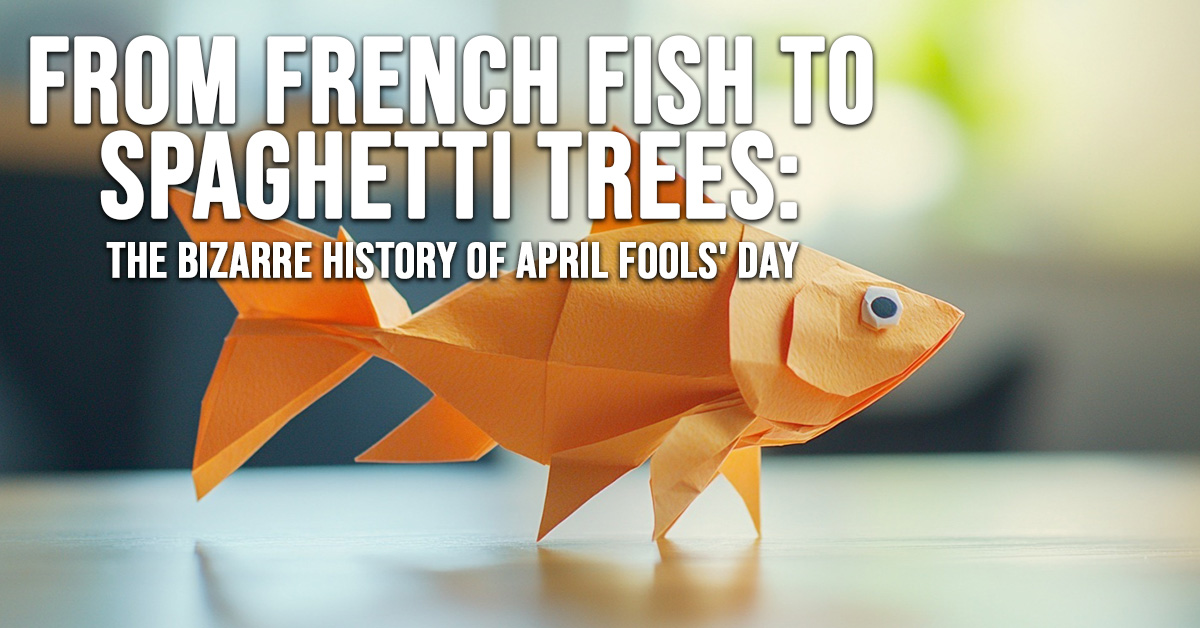
From French Fish to Spaghetti Trees: The Bizarre History of April Fools’ Day
Why do we spend the first day of April trying to trick our friends? The origins of April Fools’ Day (Wednesday, April 1, 2026) are “effectively unknowable,” but the most popular theory takes us back to 1564 France.
The Calendar Shift
Before 1564, the New Year was celebrated around the time of the Spring Equinox (late March/early April). When King Charles IX moved New Year’s Day to January 1st, those who were “slow to get the memo” and continued to celebrate in April were mocked as “fools.” In France, they were called Poisson d’Avril (April Fish), because young fish are easily caught—just like a gullible person.
The Greatest Hoax in History
On April 1, 1957, the BBC aired a segment showing Swiss farmers “harvesting” spaghetti from trees. Thousands of viewers called in asking how they could grow their own spaghetti trees. The BBC’s response? “Place a sprig of spaghetti in a tin of tomato sauce and hope for the best.”
Whether you’re pinning a paper fish to a friend’s back or just double-checking every news headline you read this Wednesday, April Fools’ Day is a charming reminder to not take life—or the internet—too seriously.